Stop Buying "Disposable" Jewelry: How to Spot a Necklace That Lasts
Author:Tooba
|
Released:November 20, 2025
Before you click “add to cart” on that shiny necklace you’ve been eyeing, pause for a moment. Most people buy jewelry based on style or price alone — and that’s exactly why so many necklaces end up tangled, tarnished, or forgotten at the bottom of a drawer.
The real difference between a necklace you wear for years and one that lasts a season comes down to details most shoppers never check. One small oversight can turn a “good deal” into wasted money.
If you’re shopping for gold, silver, or gemstone necklaces, this guide breaks down what actually matters before you buy, so your next piece looks good, feels right, and holds value over time.
Know What You’Re Paying For: Material Quality Comes First
The gap between a $30 necklace and a $300 one isn’t branding — it’s melt value and alloy stability. A piece can look identical online and perform completely differently after a few months of wear.
Here’s how to tell the difference:
Solid Gold
14K gold (58.3% purity) is the industry standard for chains because it balances color and tensile strength. It resists stretching and link deformation, even when worn daily or paired with a pendant.
18K gold (75% purity) has a richer yellow tone but is noticeably softer and more prone to bending under weight. Better for occasional wear than everyday chains.
Gold Vermeil
To legally qualify as vermeil in 2026, a necklace must have:
-
A 925 sterling silver base
-
A gold layer of at least 2.5 microns
Always verify the micron thickness. Anything thinner is simply gold-plated and will show wear within months.
Gold-Filled
A step above plating. Gold-filled jewelry mechanically bonds a thick layer of gold that makes up at least 5% of the total weight. It’s far more durable than vermeil for daily-wear chains and holds up well to friction and skin contact.
Sterling Silver (925)
Classic and durable, but look for rhodium-plated silver. Rhodium (from the platinum family) slows oxidation and prevents the dull gray tarnish common in untreated silver.
Stainless Steel
Affordable and resistant to corrosion. Best suited for trend-driven or casual pieces rather than long-term fine jewelry.
Brands known for technical consistency:
Mejuri (reliable 14K standards), GLDN (gold-filled specialists), Missoma (high-spec vermeil production).
Choose the Right Necklace for Your Face Shape
A necklace acts as a visual anchor. The goal is to balance proportions using line direction and visual weight.
-
Round Face: Elongated chains or vertical pendants create a lengthening effect.
-
Oval Face: Naturally balanced. Curved chokers work well without over-extending the face.
-
Heart-Shaped Face: Shorter, rounded styles (omega or herringbone chains) add horizontal balance.
-
Square Face: Rounded textures like rope chains or circular pendants soften sharp angles.
Well-designed examples:
Tiffany & Co. (classic pendant balance), Vrai (elongated drops), Monica Vinader (architectural curves).
Always Check the Clasp and Connection Points
Most necklace failures don’t happen in the chain itself — they happen at the connection points, where stress concentrates over time. A perfectly good chain can be lost in seconds because of one weak link.
What to inspect closely:
Jump Rings
Jump rings should always be soldered shut, not just bent closed. Even a hairline gap can widen with daily movement, allowing the chain to slip out. This is one of the most common failure points in both fine and fashion jewelry.
Lobster Clasp
The most secure option for necklaces over 5 grams. Lobster clasps use an internal steel spring that maintains tension over years of wear. Look for a smooth, firm snap — a soft or gritty feel usually signals poor internal construction.
Spring Ring
Often found on lightweight or minimalist chains. While acceptable for very fine pieces, the internal spring is thin and can weaken or stick with exposure to lotion, sweat, or humidity. Not ideal for valuable or sentimental necklaces.
Magnetic Clasp
Excellent for accessibility and ease of use, especially for people with limited dexterity. However, magnets alone are not fail-safe. Always choose versions with a secondary safety latch or figure-eight lock to prevent accidental separation.
Reputable retailers such as Blue Nile, Brilliant Earth, and Vrai disclose clasp types, metal composition, and soldering standards — details often missing from mass-market listings.
Match Your Metal to Your Skin (and Sensitivity)
Metal choice is about chemistry as much as color. The wrong alloy can irritate skin or dull quickly, no matter how beautiful it looks.
Warm undertones
Yellow gold and rose gold (copper-alloyed) complement golden or olive skin tones and tend to look richer against warmer complexions.
Cool undertones
Silver, white gold, and platinum enhance pink or cool-neutral skin tones and create a cleaner, higher-contrast look.
Sensitive skin considerations
White gold is often alloyed with nickel, the most common cause of jewelry-related contact dermatitis. If you have sensitive skin, only choose white gold explicitly labeled nickel-free.
Platinum is the safest option for extreme sensitivity — it is naturally white, highly inert, and does not require rhodium plating.
Fashion vs. Fine Jewelry: Think Cost Per Wear
Not every necklace is meant to last decades — but problems arise when shoppers expect permanence from temporary materials.
Fashion Jewelry
Typically made from brass, zinc, or mixed alloys with surface plating. Ideal for trend-driven or seasonal styles, but once the plating wears through, the piece cannot be repaired or refinished.
Fine Jewelry
Made from solid precious metals such as gold, sterling silver, or platinum. These pieces can be polished, resized, repaired, and even melted down into new designs. They also retain intrinsic metal value.
The cost-per-wear reality:
A $200 14K gold chain worn regularly for 5 years averages $0.10 per wear and still holds gold value.
A $30 plated necklace lasting 3 months costs $0.33 per wear and has zero resale or repair potential.
Verify Hallmarks and Transparency
When shopping online, hallmarks are your only proof of what you’re actually buying. Always check near the clasp or tag for stamped markings:
14K / 585 — 58.5% gold
18K / 750 — 75% gold
925 — Sterling silver
Lack of a hallmark, vague terms like “gold tone,” or missing weight information are immediate red flags.
Brands known for consistent disclosure and sourcing transparency include Blue Nile, Brilliant Earth, and Vrai.
How to Layer Without Tangling
That “bird’s nest” knot isn’t random — it’s usually caused by chains with similar weight, length, and surface geometry interacting.
To layer cleanly:
Combine different textures: Mix "stiff" chains (snake or herringbone) with "fluid" ones (paperclip or rope). Different movement patterns prevent them from nesting.
Stagger weight: Place the heaviest pendant on the longest chain — gravity acts as an anchor to keep layers separated.
The 2-inch rule: Maintain at least 2 inches of length difference between chains to create clear "lanes" for each piece.
The "Straw Trick" for travel: Thread dainty chains through a drinking straw before clasping to keep them perfectly straight in your bag.
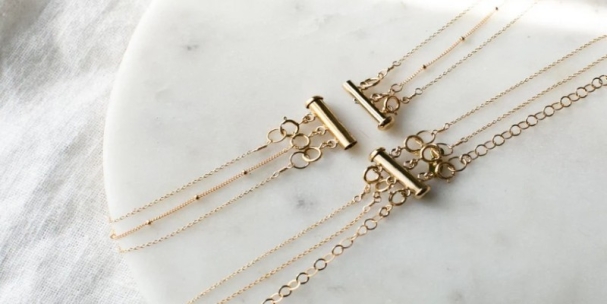
Use a necklace separator: A multi-strand clasp anchors chains at the back of the neck, keeping spacing consistent all day.
Care Determines Longevity
Even fine jewelry degrades faster without basic care habits.
“Last on, first off”: Apply perfume, hairspray, and lotions before your jewelry. Alcohols and acids dull finishes and damage porous stones like pearls.
Fasten before storing: Always close the clasp before putting jewelry away to prevent chains from threading into impossible knots.
Store separately: Use individual soft pouches. Metal-on-metal contact causes micro-scratches that kill the shine over time.
Clean with caution: Use a dedicated jewelry cloth. Avoid ultrasonic cleaners for pearls, opals, or emeralds — vibration can cause internal fractures.
Dry thoroughly: Never store jewelry while damp. Trapped moisture leads to faster oxidation and can irritate your skin.
Buy Smart, Shine Longer
Before buying another necklace, focus on details like metal, clasp, and length. Choose 14K or vermeil gold for daily wear, or certified fine jewelry from brands like Blue Nile or Vrai for lasting value. Trend lovers can enjoy affordable pieces from Missoma or Ana Luisa. Thoughtful choices balance quality, comfort, and design — turning a simple necklace into a timeless piece you’ll enjoy for years.
You May Like
Apparel & Shoes
Best Smart Casual Shoes To Pair With Modern Office Outfits
Apparel & Shoes
Top 10 Ballet Flats Every Fashion Lover Must Try

Fashion Trends
Street Style Evolution: Fashion Trends Inspired By Urban Culture
Fashion Trends
Elle Fanning's Dark-Wash Cuffed Jeans Are Peak 2026 Cool-Girl Style

Fashion Trends
5 Early 2000s Fashion Trends Gen Z Is Bringing Back in the Mid-2020s