Jewelry Trends 2026: What’s In, What’s Out, and the 70/20/10 Rule
Author:Tooba
|
Released:November 22, 2025
Jewelry right now is less about chasing a single look and more about building pieces that feel intentional, wearable, and lasting. The strongest trends moving into 2026 focus on form, material honesty, and styling freedom - jewelry that works across outfits instead of sitting in a box. If you’re buying with longevity in mind, these twelve trends reflect where the industry is actually heading, not just what flashes on social feeds.
1. Sculptural Gold: The Return of Weight
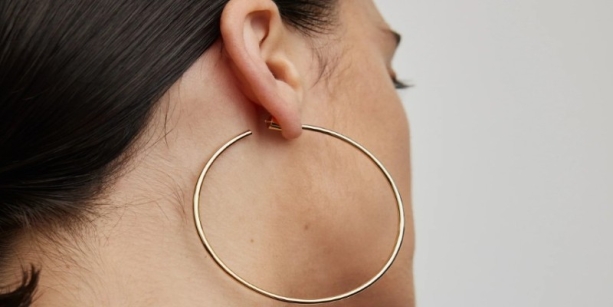
The thin, "whisper" gold of previous years is gone. In 2026, gold is about high-polish surfaces and architectural volume. We are seeing a move toward heavy-walled hollow gold. This gives you the visual impact of a solid 18k piece without the unwearable weight or the $5,000 price tag.
Designer Tip: Look for "electroformed" gold. This process creates bold, seamless shapes that are lightweight but durable.
What to buy: Oversized teardrop earrings and "molten" rings from brands like Mejuri or Jennifer Fisher.
The 14k vs. 18k Choice: For daily sculptural pieces, stick to 14k gold. It is harder and resists the dents that often ruin high-polish surfaces on 18k items.
2. Industrial Chains: Hardware Aesthetics
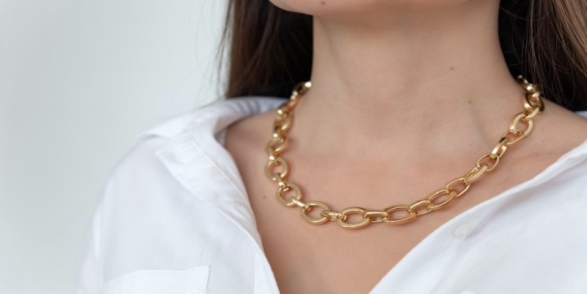
Chunky links are evolving into "hardware-grade" jewelry. We are moving past the standard curb link into carabiner closures, U-links, and nautical shackles.
Check the Clasp: In 2026, the clasp is the pendant. Look for "oversized lobster" or "threaded bolt" closures.
Where to shop: Monica Vinader and Missoma for mid-range; Tiffany & Co. (HardWear line) for investment.
Styling Tip: Don’t hide the clasp at the back of your neck. Rotate the necklace so the functional hardware sits right at your collarbone.
3. The Silver Peak: Liquid Metal
Silver has officially moved from a "budget alternative" to a high-fashion preference. The 2026 look is "Liquid Silver"—jewelry that looks like it was poured onto the body.
Technical Tip: Look for Argentium Silver. It has a higher silver content than Sterling (935 vs 925) and is much more tarnish-resistant.
The Look: Wide, mirror-finish cuffs and thick "snake" chains.
Decision Factor: If you have cool skin undertones (look at the veins on your wrist; they’ll look blue/purple), 2026 is your year to go all-in on silver.
4. Intentional Mixed Metals: The 70/30 Rule
Mixing metals is no longer an accident; it’s a design strategy. To make this look professional rather than messy, follow the 70/30 rule: 70% of your look should be one metal (e.g., gold) and 30% should be the accent (e.g., silver).
Shopping Tip: Buy "bonded" pieces where the two metals are already joined in the design.
Pro Move: Wear a silver watch with a gold ring, or a silver necklace with gold charms. This breaks the "matched set" look which now feels dated.
5. Bespoke Charms: Individual Curations
We are moving away from mass-produced "initial" necklaces toward "life-story" charms. Think vintage coins, zodiac symbols, and "found objects" cast in gold.
The 2026 Twist: Carabiner-style necklaces that allow you to swap charms in seconds.
Where to find them: Etsy for vintage charms, Catbird for dainty additions.
Investment Tip: Solid gold charms hold resale value much better than plated ones, as they won't lose their detail over time.
6. Organic Pearls: Keshi and Baroque
The perfectly round, white pearl strand is currently on hiatus. 2026 belongs to the Keshi pearl (non-nucleated pearls that are all nacre) and Baroque pearls (irregular shapes).
The Professional Check: Rub two pearls together gently. If they feel slightly gritty, they are real. If they are smooth, they are plastic or glass.
How to Wear: Pair a single, large baroque pearl on a thick gold chain. The contrast between the rough pearl and the smooth metal is the core of this trend.
7. Kinetic Jewelry: Motion and Play
Jewelry you can interact with is a major 2026 trend. Think spinning rings, "flip" pendants, and articulated earrings that move with your head.
Why it works: It’s "fidget" jewelry that looks like high-end engineering.
What to look for: Pieces with hidden hinges or ball bearings.
Brands: Spinelli Kilcollin for linked rings, or Foundrae for symbolic spinning medallions.
8. Saturated Gemstones: Color Over Clarity
In 2026, we are choosing stones with "character"—meaning inclusions and deep, saturated colors. Teal sapphires, bi-color tourmalines, and "salt and pepper" diamonds are replacing the standard clear diamond.
The Insider Pick: Spinel. It comes in incredible reds and blues, is almost as hard as a sapphire, but costs significantly less.
Decision Tip: If you want a "pop" of color, go for a bezel setting (metal all around the stone). It protects the edges of the gem and makes the color look more intense.
9. Shoulder-Grazing Earrings
Earrings are getting longer and more dramatic. We are seeing "linear" styles that literally touch the collarbone.
Comfort Tip: Before buying, check the weight. Anything over 10 grams per earring will likely cause discomfort after two hours.
Styling Tip: Wear these with a slicked-back bun or a sharp bob. Hair should not compete with the jewelry.
10. Architectural Brutalism
This trend features raw textures, hammered finishes, and "unfinished" edges. It looks like jewelry that was found in an ancient ruin but polished for the modern day.
Material: Often seen in bronze (with a gold plating) or oxidized silver (which looks blackened/grey).
Brands: Alighieri is the leader in this "crumpled gold" aesthetic.
11. Lab-Grown "Maximalism"
Lab-grown stones are no longer just for engagement rings. In 2026, they are being used to create massive "statement" pieces that would be price-prohibitive with mined stones.
Buying Advice: Don't pay "mined" prices for lab stones. You should be paying about 20-30% of the cost of a natural stone for a high-quality lab equivalent.
Look for: 5-carat lab-emerald cocktail rings or tennis necklaces with 10+ carats of lab diamonds.
12. The "Power" Pinky Ring
Signet rings have moved from the ring finger to the pinky. This is the 2026 "status" move for both men and women.
Personalization: Skip the family crest. Go for a blank, high-polish face or a single flush-set stone (like a small ruby or emerald).
The Fit: Pinky rings need to be tighter than other rings because the finger tapers toward the end. A "comfort fit" (rounded inside) is essential for this finger.
Professional Buying Tips
When evaluating a piece, move beyond the initial sparkle and perform these three specific "Designer Checks" to ensure the item will survive daily wear.
1. The Surface Integrity Check (Plating vs. PVD)
In 2026, the industry has shifted toward PVD (Physical Vapor Deposition) for high-wear items like watches and bangles. PVD is a vacuum coating process that makes the gold finish much harder and more scratch-resistant than traditional electroplating.
Actionable Tip: If you are buying a piece for daily "set and forget" wear (like a permanent bracelet or a heavy cuff), prioritize PVD-coated stainless steel or Gold Filled over Vermeil.
The Red Flag: Avoid anything labeled "Gold Tone" or "Gold Flashed." This usually indicates a gold layer of less than 0.5 microns that will wear off within weeks, exposing the brass or copper underneath.
2. The Structural Sound & Weight Test
Quality jewelry has a specific "acoustic" profile. When you handle a high-end chain, the links should move fluidly without "catching" or making a tinny, rattling sound.
Actionable Tip: Perform the Magnet Test. Real gold and sterling silver are non-magnetic. If a piece labeled "Solid 14k" jumps to a magnet, it contains a high percentage of iron or nickel and is likely a fake or a low-quality alloy.
Look for Finished Undergalleries: Turn a ring or pendant over. A high-quality piece will have a finished "undergallery"—a metal lattice or smooth plate behind the stone. If the back of the stone is completely hollow or rough, the manufacturer cut corners on the mold.
3. Stone Security: Beyond the Prongs
2026 is the year of the Bezel and Flush setting. These settings wrap the metal entirely around the stone’s girdle, protecting the edges from chipping.
Actionable Tip: If you prefer prongs, look for six prongs on round stones rather than four. If one prong breaks on a four-prong setting, you lose the stone instantly. On a six-prong setting, the stone remains secure until you can get to a jeweler.
The Glue Test: Never buy a piece where stones are held in by glue (common in "pave" costume jewelry). Over time, heat and moisture will dissolve the adhesive. Professional jewelry uses the tension of the metal itself to lock the stone in place.
4. Verifiable Sustainability
Don't settle for the word "recycled." In 2026, true transparency requires certification.
Look for the RJC or SCS Stamp: Ask if the brand is a member of the Responsible Jewellery Council (RJC) or holds SCS-007 certification. These indicate a third-party audit of the entire supply chain, not just a marketing claim.
How to Build Your 2026 Wardrobe
Instead of chasing every trend, adopt the 70/20/10 Modular Strategy. This ensures you have a versatile collection that holds financial value while still feeling current.
1. The 70% Foundation (The Anchors)
Invest the bulk of your budget in high-purity, solid metals (14k or 18k gold and Platinum). These are your "Anchors"—the pieces you never take off.
The List: One heavy sculptural cuff, one high-quality industrial chain, and one pair of signature gold hoops.
Designer Advice: These pieces should be bought based on Cost Per Wear. A $1,000 solid gold chain worn 300 days a year costs only $3.33 per wear and retains its melt value forever.
2. The 20% Character (The Narrative)
Use this portion of your budget for pieces that express your specific identity. This is where you shop for Vintage Revival and Bespoke Charms.
The Strategy: Focus on items that have "soul"—hand-engraved signet rings, family heirlooms you've had reset, or stones with unique inclusions. These pieces break the "catalog" look and make your jewelry feel curated, not just bought.
3. The 10% Experiment (The Seasonal Highlights)
This is for the high-trend, high-impact items that might not be in style in three years. This is the place for Silver Liquid Metal, Oversized Acrylics, or Experimental Lab-Grown Maximalism.
The Strategy: Spend less here. Buy high-quality Silver or PVD-coated pieces rather than solid gold. This allows you to participate in the "Bold Gemstone" or "Shoulder-Duster" trends without the financial sting if the trend fades.
You May Like
Apparel & Shoes
Top 10 Ballet Flats Every Fashion Lover Must Try
Apparel & Shoes
Retro Running Shoes: Why Vintage Sneakers Are Back In Style
Fashion Trends
Elle Fanning's Dark-Wash Cuffed Jeans Are Peak 2026 Cool-Girl Style

Fashion Trends
5 Early 2000s Fashion Trends Gen Z Is Bringing Back in the Mid-2020s

Design
15 Beginner Mistakes That Make Your Designs Look Cheap (And How To Fix Them)